

Rabobank is modernising its building management system (BMS) with an open, secure, and future-proof platform
Rabobank is modernising its building management system (BMS) with an open, secure, and future-proof platform

How Rabobank transformed aging building management systems into a scalable, cybersecure, and ready for artificial intelligence
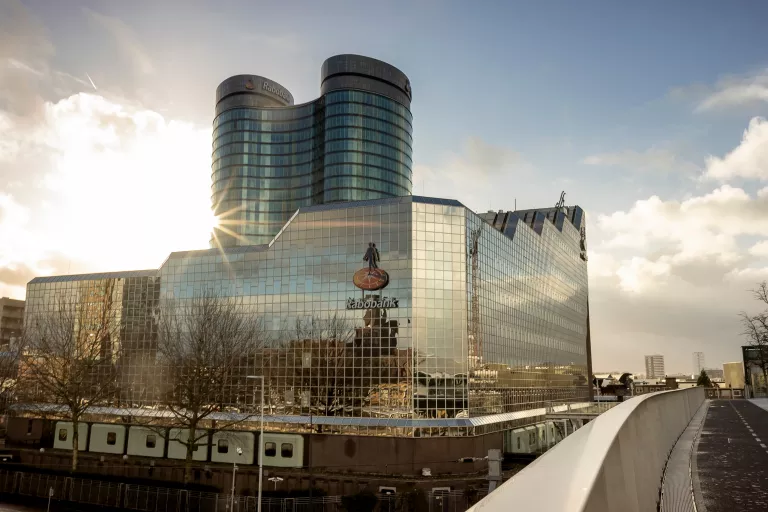
Rabobank is one of the leading banking and financial groups in the Netherlands. Headquartered in Utrecht and operating internationally, the organisation serves individuals, businesses, and players in the agri-food, agricultural, and energy sectors. Against a backdrop of increasingly stringent cybersecurity, evolving European regulations, and the need to modernise its infrastructure, the bank has embarked on a transformation of its Building Management Systems (BMS). In collaboration with Equans and its subsidiary Equans Digital, the bank has deployed an open and scalable platform to unify its systems, strengthen its security, and prepare for the future of its smart buildings.
To define the best strategy, Rabobank and Equans Digital conducted a collaborative development process involving both IT and OT teams. Following an in-depth market analysis and a thorough technical validation phase, the bank selected an open platform capable of meeting its security, interoperability, and flexibility requirements.
This phase included, in particular, a Proof of Concept (POC) to validate integration with existing infrastructure and ensure compliance with cybersecurity requirements specific to the banking environment.
Rabobank’s Challenge: Modernising Building Management Systems While Ensuring Security and Flexibility
Over the years, Rabobank had been operating several building management systems from different vendors. Running on technologies that had become obsolete and were no longer supported by the IT teams, these environments created increasing challenges in terms of security, maintenance, and operations. The organisation had to simultaneously address several strategic challenges:
- Strengthen the cybersecurity of building infrastructure;
- Harmonise disparate systems;
- Maintain complete control over data;
- Avoid dependence on a single vendor;
- Prepare for the integration of future smart building services and new energy regulations.
Simply replacing the existing systems with identical ones would have only postponed the challenges. Instead, the bank was looking for a sustainable architecture capable of supporting its needs over the long term.
The Solution: A Unified Platform to Prepare for the Buildings of Tomorrow
Rather than simply replacing its existing systems with identical ones, Rabobank opted for a more ambitious transformation. The goal was to build a building management system capable of meeting current needs while supporting future technological, regulatory, and operational changes. This approach was based on an open architecture, harmonised data governance, and controlled convergence between IT and OT environments.
Thanks to Equans Digital’s expertise in industrial automation and complex systems integration, the project enabled a transition from fragmented legacy environments to a unified, secure, and scalable platform designed to support future smart building applications, energy optimisation, and data monetisation.
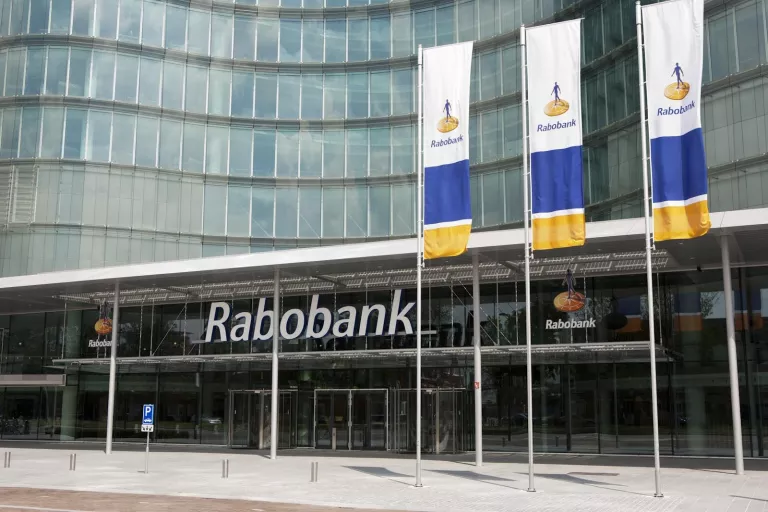
For several years, multiple building management systems (BMS) from different vendors coexisted within Rabobank’s buildings. This situation complicated day-to-day operations, limited visibility into the equipment, and made it more difficult to evolve the technology ecosystem.
To address these challenges, Rabobank adopted an open platform that enables the interconnection of different systems within a single, interoperable environment. This approach ensures greater flexibility in future technology choices and significantly reduces the risk of dependence on a single manufacturer or software vendor.
Beyond modernising the building management system, this architecture lays the foundation for a system capable of integrating new equipment, new digital services, and future use cases without requiring a complete overhaul of the infrastructure. The organisation thus has a sustainable platform capable of evolving in step with its needs.
One of the project’s main challenges was the heterogeneity of the data from the various legacy systems. Naming conventions, technical objects, and data structures varied from one facility to another, complicating their use and analysis.
To create a consistent data foundation, the teams implemented a standardised structure based on a uniform approach to modeling equipment, tags, and interfaces. This harmonisation significantly improves the quality and reliability of the available information.
This standardisation also represents a crucial step toward enabling advanced data utilisation, particularly in the fields of artificial intelligence, machine learning and building energy optimisation.
The evolution of smart buildings is strengthening the interactions between operational systems on the ground and the company’s IT infrastructure. For Rabobank, it was essential to ensure these exchanges while meeting high cybersecurity and governance requirements.
The architecture was designed according to the principles of the Purdue Model, which is widely recognised for structuring and securing interactions between IT and OT environments. This approach establishes a clear separation between the different levels of the system while organising controlled communication flows between them.
By combining security, operational performance, and interoperability, Rabobank now has an environment capable of supporting its digital strategy over the long term.
For an organisation whose buildings host critical activities on a daily basis, business continuity was a key requirement of the project. Each phase of the modernisation had to be carried out without disrupting user operations or compromising the functioning of the technical systems.
The transition was therefore carried out incrementally through OTAP environments (Development, Test, Acceptance, and Production). Every component, interface, and data flow was validated before being deployed to production.
This methodology ensured the security of the entire migration process while guaranteeing complete operational continuity. The result is a modernised platform, deployed step by step, without any interruption to business and with no impact on the day-to-day operation of the buildings.
Equans Digital, a partner in the transformation of smart buildings
The project carried out for Rabobank illustrates Equans Digital’s ability to support demanding organisations in transformations that bring together building systems, cybersecurity, data, and business challenges.
Our strength lies in our ability to bridge the worlds of IT, OT, and building systems to design open, secure, and sustainable platforms. This approach enables our clients to reduce their technological dependence, leverage their data, and prepare their infrastructure for future applications of smart buildings, artificial intelligence, and energy efficiency.
From strategy to operations, our experts support organisations in the commercial, industrial, and critical infrastructure sectors to transform their buildings into true drivers of performance, resilience, and innovation.
Sustainable benefits for safer, smarter, and future-ready buildings
Beyond modernising its building management systems, Rabobank has laid the foundation for a platform capable of sustainably supporting the evolution of its buildings, their uses, and its security requirements. By replacing fragmented systems with a unified, open, and standardised architecture, the bank is improving its operational efficiency while establishing a robust foundation for innovation, energy efficiency, and advanced data analytics.

@atypix
Consolidating systems and data within a single platform provides a more consistent and reliable view of technical operations. Teams now have access to consistent, standardised information, which facilitates equipment management, performance monitoring, and decision-making.
This improved operational visibility also makes it easier to identify opportunities for optimisation, anticipate certain operational deviations, and strengthen overall control of building infrastructure. Thanks to higher-quality and more accessible data, Rabobank can rely on a unified view of its technical assets to support its future transformation projects.
Faced with increasing security requirements and the obsolescence of legacy systems, implementing a new architecture was a major challenge. The project made it possible to build an environment that complies with the bank’s strict IT governance requirements while securing data exchanges between IT and operational environments.
This approach helps reduce the risks associated with critical infrastructure, strengthen operational resilience, and prepare the organisation for future regulatory changes related to smart buildings. The new platform now serves as a solid foundation for addressing the growing challenges of cybersecurity, compliance, and risk management.
One of the project’s major objectives was to move away from a model that was heavily dependent on specific technologies and vendors. Thanks to an open and interoperable architecture, Rabobank now enjoys greater freedom in its technology choices and future developments.
This approach reduces the constraints associated with vendor lock-in and makes it easier to integrate new systems, services, or equipment over time. The bank thus has an infrastructure capable of adapting to its evolving needs without requiring a major overhaul of its technical ecosystem.
Data standardisation and architecture harmonisation do more than just meet immediate operational needs. They also create the conditions necessary for developing the applications of tomorrow. Thanks to structured, reliable, and actionable data, Rabobank now has a foundation capable of supporting:
- advanced analysis of building data;
- energy optimization of facilities;
- predictive maintenance;
- use cases for artificial intelligence;
- intelligent building automation;
- the development of new smart building services.
This scalability is a strategic asset in a context where European regulations, energy performance targets, and expectations regarding smart buildings continue to intensify. The platform thus provides Rabobank with the necessary foundation to sustainably evolve its infrastructure without compromising the technological choices made today.
FAQ – Smart Buildings & Building Management Systems
Outdated building management systems can pose cybersecurity risks, create maintenance challenges, and limit a building’s ability to evolve. Modernisation improves the security, availability, and performance of infrastructure.
An open building management system (BMS) is based on standards that promote interoperability among different devices and vendors. This approach reduces the risk of technological lock-in and facilitates future upgrades.
Smart buildings increasingly rely on the secure exchange of data between operating systems and IT systems. Carefully managed convergence improves security, operational efficiency, and data governance.
The first step is to have reliable, structured, and standardised data. An open architecture and robust data governance create the conditions necessary for the development of future AI use cases.
European regulations such as the EPBD, BACS, and GACS are gradually tightening requirements for energy management and building automation. A modern building management system (BMS) is an essential tool for meeting these requirements.
Rabobank's Perspective
“ “We were looking for a partner capable of understanding both the IT and OT worlds and bringing them together.”
Egon Jenniskens, Lead Critical Infrastructure - Rabobank
A unified building management system (BMS) platform to strengthen cybersecurity, standardise data, and prepare for the smart buildings of tomorrow

Are you looking to modernize your building management system without compromising the security, interoperability, or performance of your buildings?
Find out how the experts at Equans Digital can help you transform your smart building infrastructure—from strategy to operations. Contact us today.Are you looking to modernize your building management system without compromising the security, interoperability, or performance of your buildings?
Find out how the experts at Equans Digital can help you transform your smart building infrastructure—from strategy to operations. Contact us today.